Adaptive programming
Diagnosis, communication style, sensory sensitivities and seizure history are fields on the client record, and every session note asks about them.

KinetiqAF for trainers
Programs, billing and paperwork for the clients the big platforms were not built for.

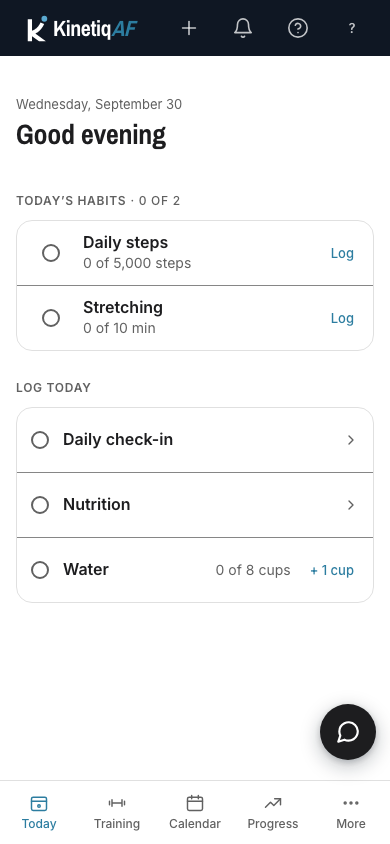
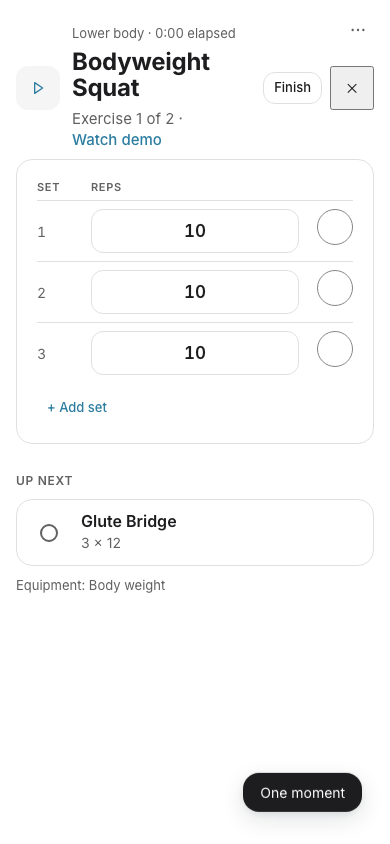
Every picture on this page is the real product on sample data, taken by the same test harness that checks it.
Diagnosis, communication style, sensory sensitivities and seizure history are fields on the client record, and every session note asks about them.
Enter the hours the regional center approved and every session counts against them, with invoices and exports for California’s Self-Determination Program (SDP) built in.

A new client does the PAR-Q+ health screening and the agreement — written to California’s §1812 health-studio contract rules — on their phone, and the other consents arrive one at a time over the first week.
Adaptive training in modules and scenario lessons, with the hours evidence a certifier asks for.
CE approval: in development.

A portal on their phone, in English or Spanish, that a caregiver can run for them.
Pricing published when the trial opens.
Trainers who work with adaptive, post-rehab and older clients — often in the client’s home, often with a caregiver in the room, sometimes paid through a funding program.
Not yet. Every trainer account is set up by hand. Join the waitlist and I’ll write when accounts open.
James Kennedy, an adaptive trainer in San Diego (NASM CPT, CES, CNC; Special Strong certified), who runs his own practice on it every day.
Your clients’ portal and intake form are in English and Spanish. The trainer side is in English.